
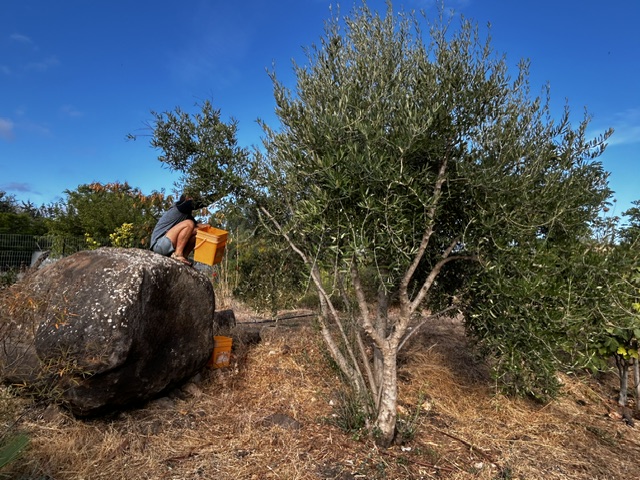
It is the season of masik, Israel’s olive harvest. The sun sits lower in the skies, throwing soft, gentle shadows across our trees. Cranes migrate overhead, flying south from Russia all the way to Africa. They gracefully move in a V-formation right over our garden, calling out as they check in on their young who wearily follow their parents.
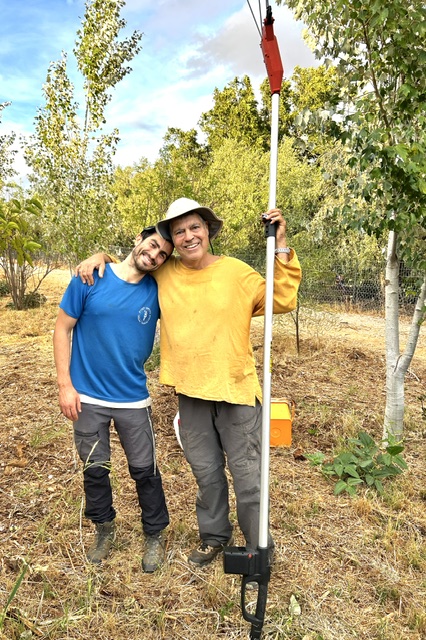
People have been harvesting olives in the Galilee for close to 8,000 years. Stone basins have been found where olives were once crushed. Even olive pits have been excavated in local archeological sites. As we harvest our trees, we feel we are touching a rhythm older than memory; one shared by our forefathers who farmed this region for millennia.
Olives are a prized crop in this part of the world. In Sefer D’varim (Deuteronomy) 8:8, the Torah speaks of Israel as being “A land of wheat and barley, of vines and fig trees and pomegranates, a land of olive oil and honey.” It does not say olives, rather it specifies the oil, emphasizing its value and status. In Temple times, the freshly crushed oil was sent to the Beit Hamikdash to keep the menorah lit in the sanctuary.
Here we are in 2026, two Canadian wannabe-farmers working this ancient land. We have 22 olive trees on our property. When we moved here, the olive trees had been neglected for decades. We pruned them, added compost around the base, and started to irrigate them with a drip system. This is our third harvest here and each year, our trees seem to give more.
We pamper them, even though they have learned resilience over the years. This hardy species needs little water and flourishes in shallow, dry, and rocky terrain, defying the intense summer heat.
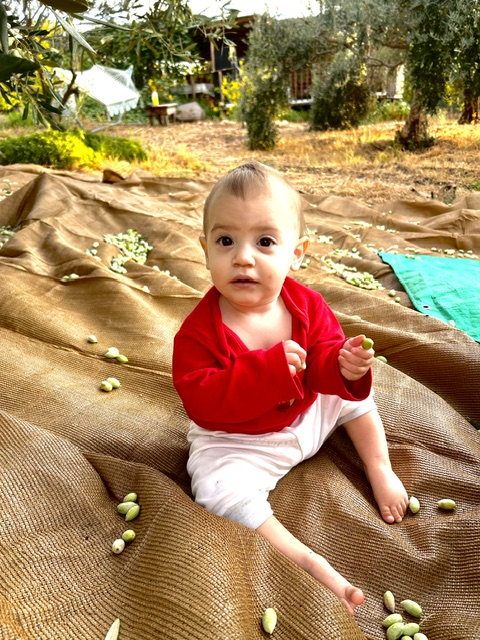
We watch our trees with wonder throughout the seasons, spotting tiny white flowers in the spring. These give birth to clusters of miniature olives that swell in size, maturing from a light green to khaki and then darkening to shades of purple before turning black.
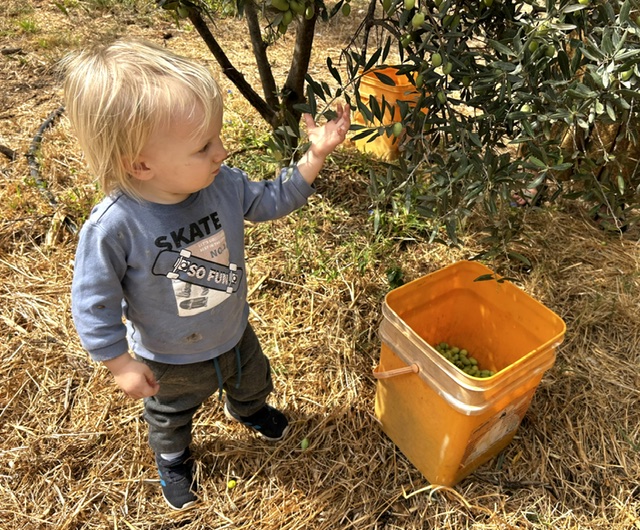
Silent, strong and ever so giving, their gnarled boughs are now heavily laden with olives. The harvest here tends to be abundant every two years, and this is a plentiful year.
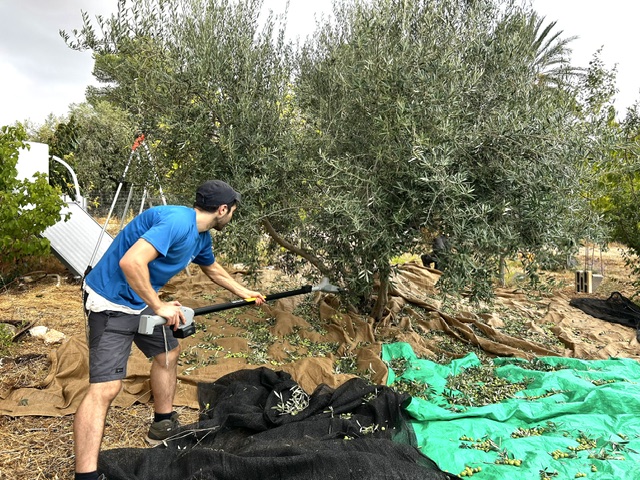
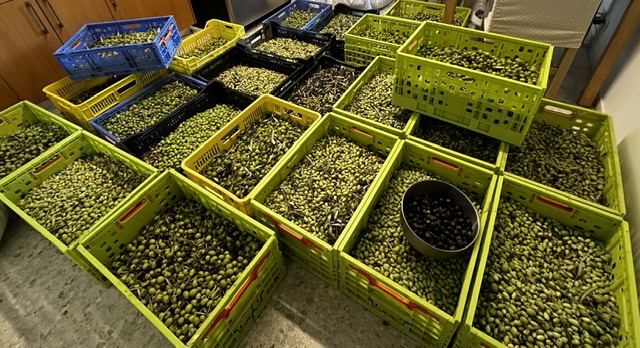
We start our harvest as soon as the sun rises, first laying out our nets under the first three trees. We have electric rakes that carefully comb the olives from the branches. I prefer to use my hands to coax the olives into my bucket, choosing the lower branches where the rake cannot reach. When the tree is lighter and emptied of olives, we gather them towards the edge of the net and carefully pour them into plastic containers.
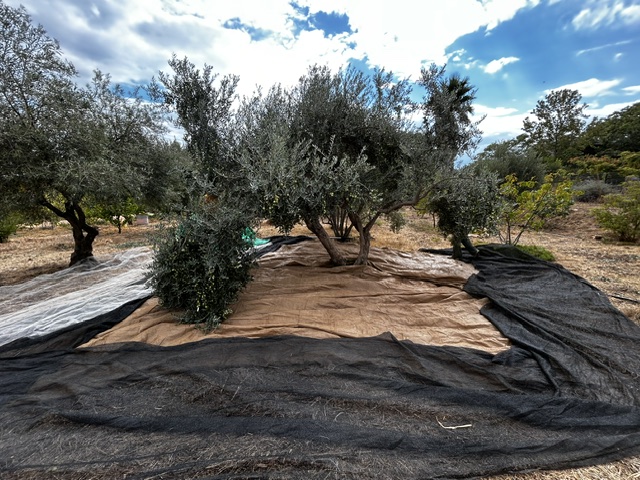
This year, some children and grandkids came to lend a hand, turning this into an outdoor family celebration. It took us a while to find momentum, but soon enough we were working as a team, pouring the harvested olives out, taking them into a cold room inside, then moving to the next trees and positioning the nets. The sun was warm, then the clouds filled the sky and a short spell of gentle rain fell.
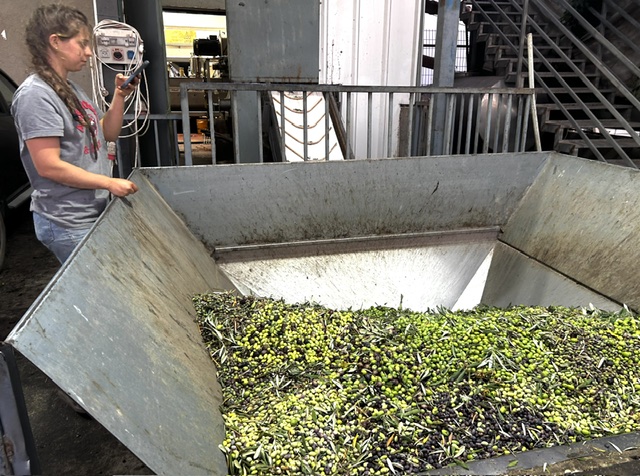
At the end of the day, we loaded up two cars and a trailer, arriving at the press (beit bahd) in the Arab town of Tu’ran, just in time for the prayer rugs to be laid down. The sun was setting crimson and the muezzin called across the valley. We emptied our bags and crates into a chute and watched as the olives were cleaned of debris and leaves, washed, then sent to a holding area waiting to be pressed.
The place was hopping as both Jewish and Arab farmers pulled in with loads of olives. In the Galilee, where Arabs and Jews live side by side, this is a moment of joy that is appreciated by all. To mark the occasion, someone brought out freshly baked pita, creamy labane and a bowl of olives. People waited patiently before it was their turn to take the throne, the chair beside a prized tap. Each farmer’s face would beam with light as his oil was pressed.
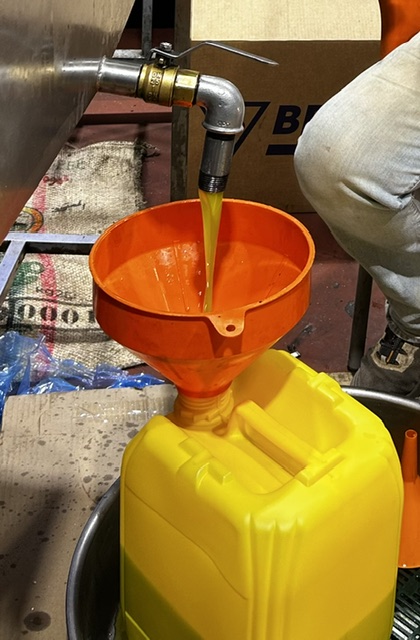
We were given large jerrycans to place under the tap and Amir opened the faucet. A bright green liquid came out, the very oil from those trees we patiently watched for months, then harvested this very day.
In total, our olives weighed 520 kilograms, and we took home 80 litres of liquid gold. It is still green from the chlorophyll and a bit harsh and spicy on the tongue. The color will eventually lighten, and the oil will become clearer as the sediment settles. The taste will soften as does an aged wine. Back home, we placed it in stainless steel vats and can proudly say that we have organic, cold-pressed extra virgin olive oil on tap.
The masik is all about timing, as we now understand. If you wait too long, the olives shrivel, harden and drop off the trees. If you harvest too soon, they are immature. There are those who say to wait until after the rains come and those who say it does not make a difference. It is a fine calculation and an art.
For us, it was a gamble and in retrospect, I think we harvested too early this year. But I did learn that the unrefined oil from the immature olives is incredibly healthy. Hippocrates called olive oil the ‘great healer.’ A type of medicine, it is filled with beneficial polyphenols that protect the heart, aid high blood pressure, reduce chronic inflammation, arthritis and joint pain, as well as lower blood sugar spikes. In fact, some still drink warm olive oil daily as a healthy ritual.
I go outside the next day and observe that our trees look lighter, even relieved. Boughs that were weighted to the ground with olives are now upright. The silvery leaves face the sky and so do I. Not unlike our ancestors once did, I too am anticipating the winter rains. I feel so connected to those who once lived here, farmed the groves, and appreciated pure, freshly pressed olive oil.
Discover more from Life in Israel
Subscribe to get the latest posts sent to your email.


