
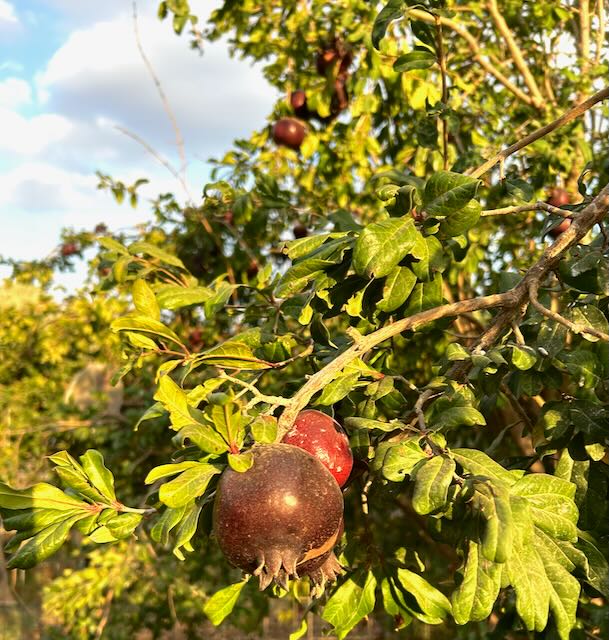
מציאות לא מרחמת
עורי ארץ מדממת
תני לרוח הנושבת לרפא אותךReality shows no mercy
Wake up, bleeding land
Let the blowing wind heal you
Shema Israel, song by David Broza and Avraham Tal
Plonk, plonk, ring the olives in my pail. Clunk, clunk, clash the metal poles as the sukkah is being built. Despite these sounds and the song of a few birds, everything feels muted, yellow, dried, and crunchy from a fierce and baking Mediterranean summer. But I observe tiny seasonal changes.
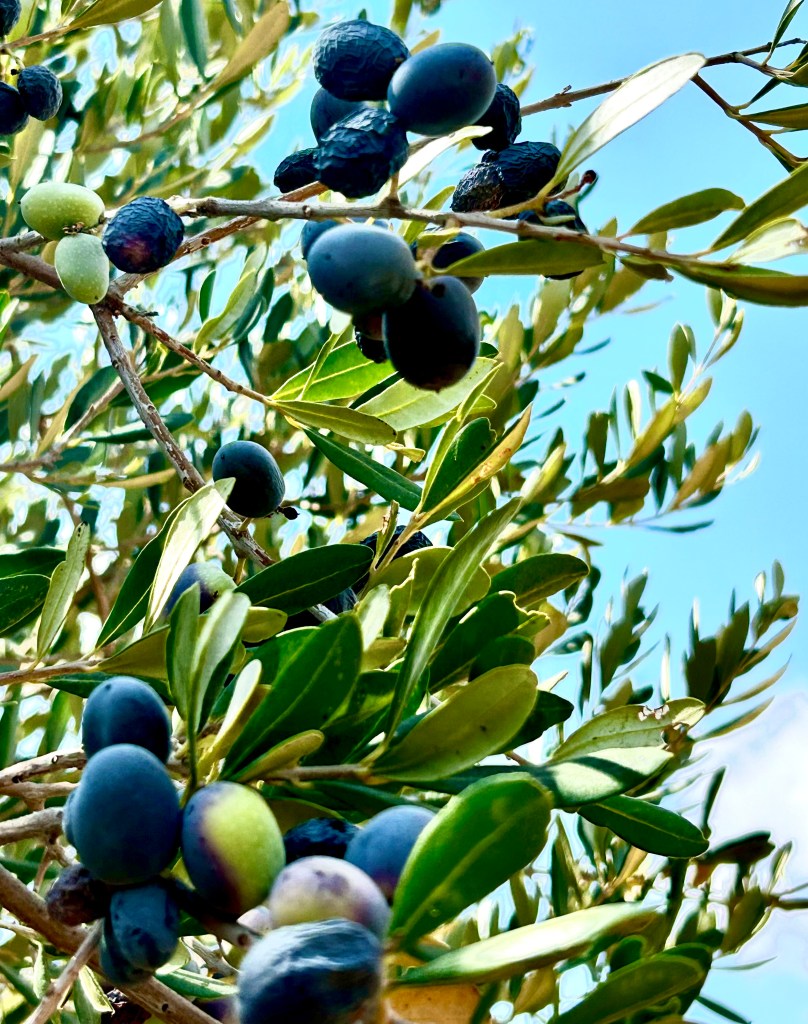
The pomegranates are ripe, the last of the grapes are picked and crushed into wine. Clusters of dates are heavy on the trees, and the olive harvest begins. My shadow is now longer as the sun travels lower across the autumnal sky. The nights are cooler – sweater weather, almost.
There is a fresh breeze, and that azure summer sky has become a freeway for cotton ball cumulus clouds. I look up at them and study their underbelly, checking for the promise of rain – just a few drops would do. “Not today,” they laugh, passing me over as they head east.
We are in the heart of Tishrei, the autumn month that encompasses Rosh Hashanah, Yom Kippur, and Sukkot, ending with Hoshana Raba and Simchat Torah.
Sukkot, the final ingathering of the harvest season, is especially aligned with Israel’s agricultural rhythm. Historically, it is celebrated as Chag HaAsif and is a time of gratitude for the bounty despite the intensity of the summer heat and the lack of rain. In Biblical times, farmers would harvest, place the fruits into storage, and then celebrate in a sukkah at the Temple in Jerusalem, returning home before the winter rains.
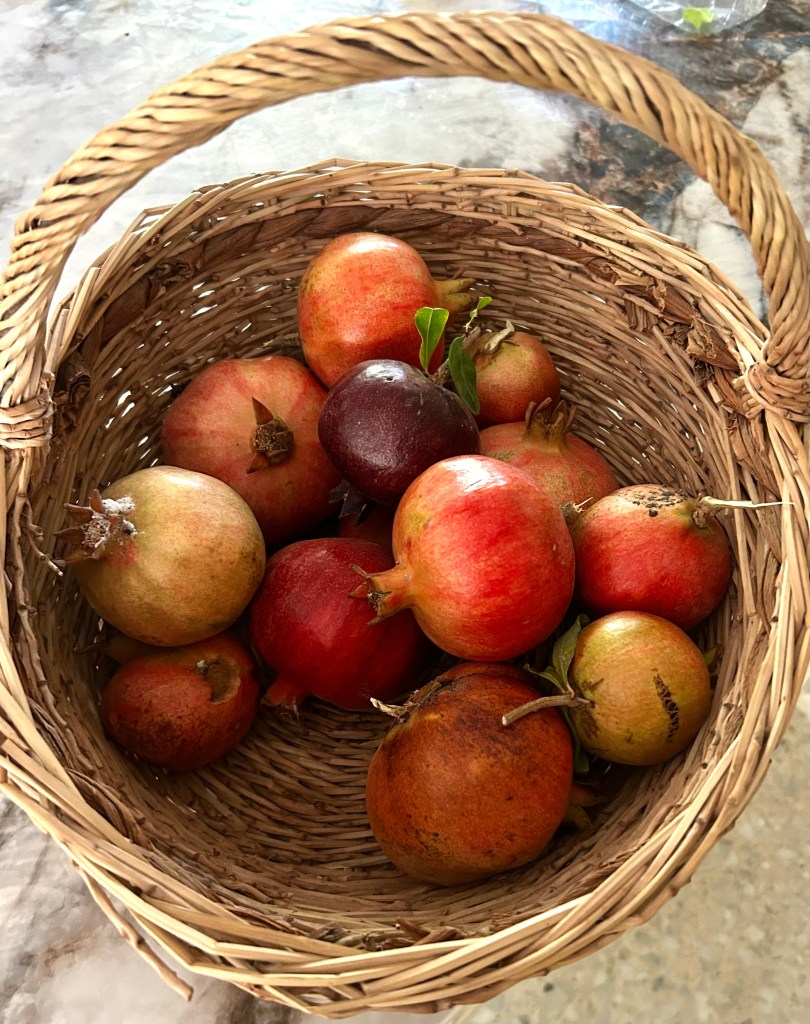
The gratitude for the bounty may be lost on most city-dwelling Israelis, but the grocery stores are filled with dates and pomegranates, apples and honey, plus tinsels to decorate their sukkahs.
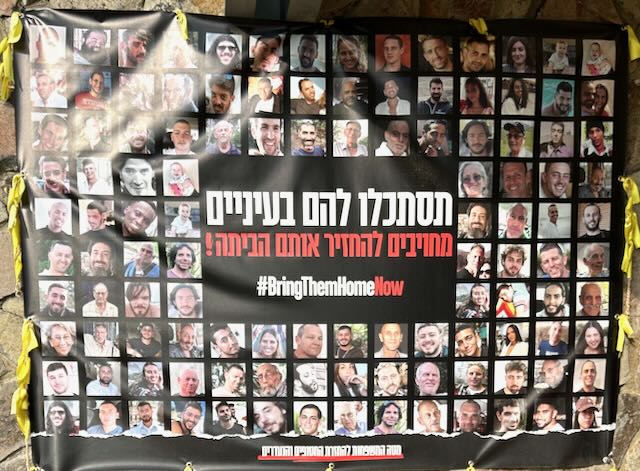
Then this holiday flies smack into Simchat Torah, also the anniversary of October 7. That day is etched on every Israeli’s heart. Last year during this time, highway overpasses were draped with flags and signs that read “Bring Them Home Now.” Photos of hostages appeared on signposts, cars, and in coffee shops, while empty yellow chairs sat in the main squares of each community.
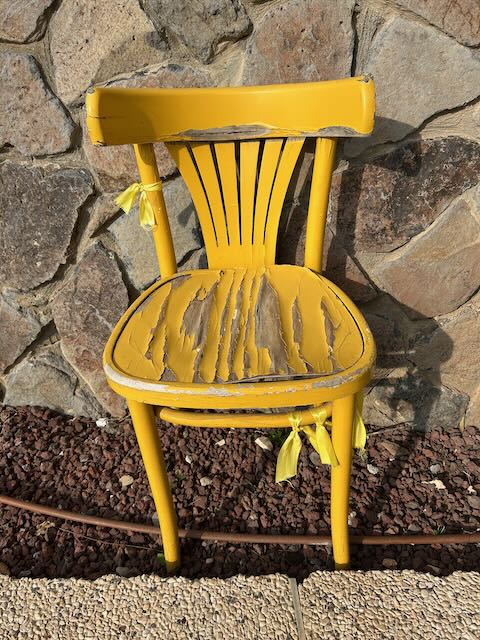
People wore yellow pins, tied yellow ribbons to cars, flags, benches, and trees. Tearful, often angry, demonstrations were held weekly, and Ben Gurion Airport had a place for each hostage, young and old, a long row honoring innocent lives torn from the ordinary moments of life — from beds and breakfast tables, from homes, and from the dance music of the Nova Festival.
Last Hoshana Raba, the very day before Simchat Torah, the remaining hostages finally came home after two years of hell. Today, the hostage pictures are gone, the flags no longer flutter from overpasses, and the demonstrations have ended. But the pain has not passed. The trauma is still there. And the war is not over.
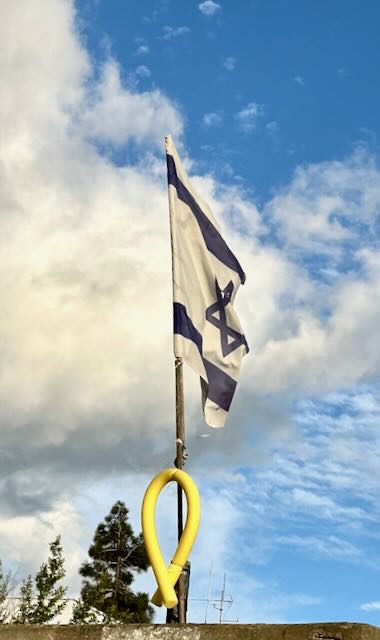
Yet Israelis are determined to live the best life they can. Most, including many secular Israelis, dine in their own Sukkahs to commemorate the holiday. On Simchat Torah, people soulfully dance in circles hugging children closely on their shoulders.
The spirit cannot be taken away for we have been around for too long. In fact, Joshua returned here with the tribes some 3,430 years ago. That represents many harvests for those living here and many festive Sukkots.
There were wars, exiles, and now, a large, modern day return. I look to my wise olive and pomegranate trees; they are more in synch with the land than us. They have much to teach us, and we have to be grateful for.
Outside, past the screen door, the rhythmic plonk, plonk of olives falling into a metal pail calls me back. The fierce summer has finally yielded, the harvest is being gathered, and we remain, tending our own corner of this enduring land.
שמע ישראל, עומד ומתפלל
על כל הילדים שלך, על כל הצבעים שלך
מה בן אדם מחפש לו בעולם?
פינה שלו, מנגינה שלו, מקום לדאגה
Hear, O Israel, I stand and pray
For all of your children, for all of your colors
What does a person look for in this world?
His own corner, his own melody, a place to care Shema Israel, song by David Broza and Avraham Tal
Discover more from Life in Israel
Subscribe to get the latest posts sent to your email.


